NON-FERROUS METAL

Nickel

Pure nickel is a silvery white metal. Because the surface is oxidized at room temperature to form a dense and tight protective film, it has excellent corrosion resistance. Pure nickel has excellent kneading performance and processing performance, and can be processed into tubes, rods, wires, plates, strips, foils and other products.

Pure nickel material has good corrosion resistance in any concentration and temperature of NaOH solution and molten NaOH above 400°C. Pure nickel materials have good corrosion resistance to Na2O2, Na2CO3, NaHCO3 and alkaline solutions or molten liquids containing KNO3.

Nickel alloy tubes
Nickel alloy tubes for corrosion-resistant industrial applications.
Technical Data

Physical and Mechanical Properties of Nickel

Nickel is a ductile transition metal with good thermal and electrical conductivity, a relatively high melting point and a face-centered cubic crystal structure. Its key physical and mechanical properties are summarized below.

Property Value Property Value
Element Symbol Ni Atomic Number 28
Atomic Weight 58.6934 Density (20°C) 8.90 g/cm³
Melting Point 1455°C Boiling Point 2913°C
Crystal Structure FCC Thermal Conductivity 90.9 W/(m·K)
Specific Heat Capacity 444 J/(kg·K) Linear Thermal Expansion 13.4 × 10⁻⁶ K⁻¹
Young's Modulus 200 GPa Shear Modulus 76 GPa
Bulk Modulus 180 GPa Poisson's Ratio 0.31
Mohs Hardness 4 — —

Values are typical reference data for pure nickel. Thermal conductivity, specific heat capacity and thermal expansion are temperature-dependent. Actual properties may vary with purity, material condition and measurement methods.

Chemical Analysis

Chemical Composition of Pure Nickel

Pure nickel grades are classified according to their nickel and cobalt content, together with specified limits for impurities. The following table summarizes the minimum nickel content and maximum impurity limits for selected commercial pure nickel grades.

Grade Limit Ni + Co Cu Si Mn C Mg S P Fe Pb Cr Sum of Impurities
N4 Minimum 99.9 ———————————
Maximum — 0.0150.030.0020.010.010.0010.0010.040.001—0.1
N5 (N02201) Minimum 99 ———————————
Maximum — 0.250.30.350.02—0.01—0.4—0.2—
N6 Minimum 99.5 ———————————
Maximum — 0.010.010.050.10.10.0050.0020.10.002—0.5
N7 (N02201) Minimum 99 ———————————
Maximum — 0.250.30.350.15—0.01—0.4—0.2—
N8 Minimum 99 ———————————
Maximum — 0.150.150.20.20.10.015—0.30.002—1
DN (Electric Vacuum Nickel) Minimum 99.35 —0.02—0.020.02——————
Maximum — 0.050.10.050.10.10.005—0.10.002——
NY1 Minimum 99.7 ———————————
Maximum — 0.10.1—0.020.10.005—0.1——0.3

All values are expressed in weight percent (wt.%). “—” indicates that no limit is listed in the supplied composition data. Chemical requirements may vary by grade, product form and applicable specification; confirm the required limits when ordering.

Grades & Standards

Grades and Product Standards for Pure Nickel

Pure nickel is available in different grades and product forms, with corresponding material standards for sheets, strips, tubes, rods, wires and forgings. The following table summarizes the standards for selected pure nickel grades.

Grade Sheet Strip Tube Rod Wire Forging
N4 GB/T 2054
NB/T 47046
GB/T 2072 GB/T 2882
NB/T 47047
GB/T 4435 GB/T 21653 NB/T 47028
N5
(N02201)
GB/T 2054
ASTM B162
GB/T 2072
ASTM B162
GB/T 2882
ASTM B161
GB/T 4435
ASTM B160
GB/T 21653 GB/T 26030
N6 GB/T 2054 GB/T 2072 GB/T 2882 GB/T 4435 GB/T 21653 —
N7
(N02201)
GB/T 2054
ASTM B162
GB/T 2072
ASTM B162
GB/T 2882
ASTM B161
GB/T 4435
ASTM B160
GB/T 21653 GB/T 26030
N8 GB/T 2054 — GB/T 2882 GB/T 4435 GB/T 21653 —
DN GB/T 2054 GB/T 2072 GB/T 2882 — GB/T 21653 —

Standards are listed according to the supplied reference data. Product specifications and applicable standards should be confirmed for each grade and product form.

Applications

Applications of Pure Nickel

Pure nickel is valued for its corrosion resistance, thermal stability and electrical properties. It is used in chemical processing equipment, coating targets and electrode manufacturing, supporting a range of industrial and electronic applications.

Pure nickel used in chemical processing equipment, pipelines and heat exchangers
01

Chemical Processing Equipment

Pure nickel offers good resistance to many alkaline environments and selected corrosive chemicals, making it suitable for chemical processing equipment under appropriate operating conditions. Its corrosion resistance and thermal properties support the manufacture of components exposed to demanding process media.

  • Industrial pipelines and fittings
  • Heat exchangers and evaporators
  • Industrial heaters
  • Chemical reactors and vessels
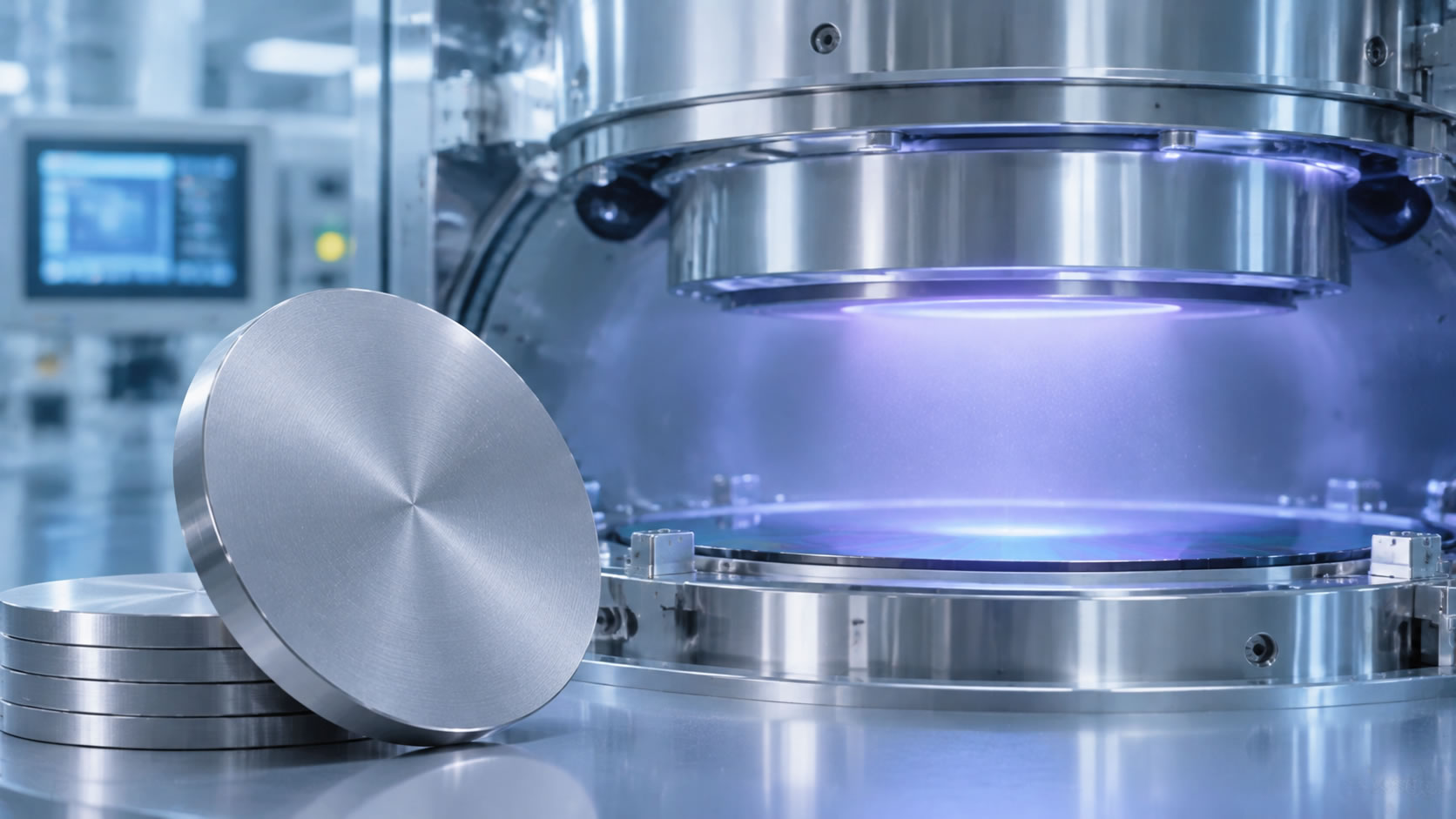
Pure nickel sputtering targets for thin-film coating applications
02

Sputtering Targets

High-purity nickel is widely used to manufacture sputtering targets for physical vapor deposition (PVD) processes. During sputtering, nickel atoms are deposited onto substrates to form thin films with controlled composition and surface properties for various industrial, electronic and advanced semiconductor applications.

  • Physical vapor deposition (PVD)
  • Thin-film coating production
  • Electronic and functional coatings
  • Industrial surface coatings
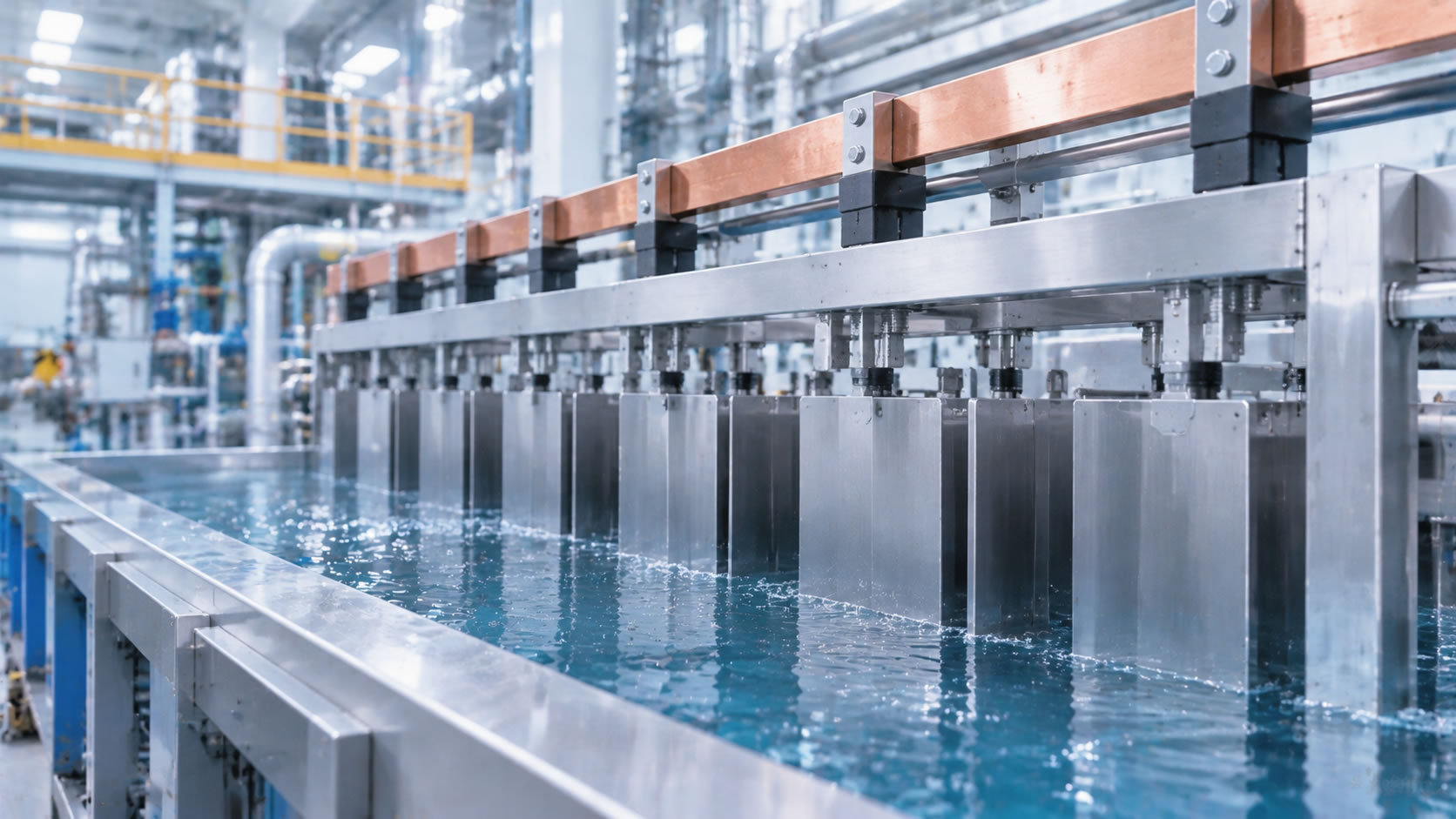
Pure nickel materials used in industrial electrode manufacturing
03

Electrodes

Pure nickel is used in electrode manufacturing because of its electrical conductivity, corrosion resistance and workability. Depending on the electrochemical environment and operating requirements, nickel materials can be processed into electrode components for industrial electrochemical systems.

  • Industrial electrochemical electrodes
  • Electrolysis equipment
  • Electrode plates and components
  • Specialized electrical applications
Why AlloyHit

Why Choose AlloyHit for Nickel Materials?

AlloyHit supplies nickel materials for chemical processing, coating production, electrochemical systems and other industrial applications. We understand that nickel requirements vary with purity grade, product form, dimensions and applicable standards. Our supply approach focuses on matching these technical requirements with appropriate material options, from commercially pure nickel to high-purity nickel products and customized specifications.

Multiple Nickel Purity Grades

Different applications call for different levels of nickel purity. AlloyHit supports material selection across several commercially pure nickel grades, including N4, N5, N6, N7 and N8, as well as other available nickel materials. Grade selection can take into account nickel content, impurity limits and the requirements of the intended manufacturing process.

Controlled Composition Requirements

Impurities such as copper, iron, carbon, sulfur, silicon and manganese can influence nickel material characteristics and application suitability. We pay attention to specified composition limits and purity targets when evaluating material requirements. Chemical analysis requirements can also be discussed according to the selected grade and product specification.

A Range of Nickel Product Forms

Nickel materials can be supplied in different forms to accommodate fabrication, equipment manufacturing and coating processes. Available product categories include nickel sheets, plates, strips, tubes, rods, bars, wires and other material forms. Dimensions and availability are evaluated according to the required grade and production specifications.

Standards and Custom Dimensions

Nickel products may be specified under different national and international standards depending on their form and application. AlloyHit reviews relevant requirements, including GB/T, ASTM and other applicable specifications, when assessing customer inquiries. Custom dimensions, tolerances and material conditions can be discussed based on drawings or detailed technical requirements.

Material Selection for Specific Applications

From nickel components used in chemical processing equipment to high-purity sputtering targets and electrode materials, each application has different requirements. Operating temperature, chemical exposure, electrical performance and fabrication methods are important considerations when selecting nickel materials. AlloyHit can review these factors with customers to help identify suitable grades and product specifications.

Explore our nickel materials or contact us at info@alloyhit.com to discuss your project.

MATERIAL COMPARISON

Nickel vs Other Specialty Metals

Nickel, niobium, titanium and tantalum offer different combinations of corrosion resistance, mechanical properties, thermal performance and electrical characteristics. Pure nickel is particularly valued for its resistance to alkaline environments, good ductility and fabrication versatility. Comparing these metals helps identify suitable materials for chemical processing, aerospace, electronics and other demanding industrial applications.

01 METAL COMPARISON

Nickel vs Niobium

Nickel and niobium serve different purposes in specialty metal applications. Pure nickel offers good corrosion resistance in many alkaline environments, along with excellent ductility and workability. It is commonly used in chemical processing equipment, electrodes and high-purity coating targets. Niobium is a refractory metal with a much higher melting point of approximately 2477°C, making it suitable for high-temperature applications and specialized alloy systems.

Nickel is widely used in industrial equipment and electronic materials, while niobium is important in applications such as C103 high-temperature alloys and NbTi superconducting materials. Their different thermal and functional characteristics make them suitable for distinct engineering requirements.

Selection Guidance

Choose nickel for alkaline chemical-processing equipment, electrodes and coating targets. Consider niobium for refractory components, high-temperature structures and superconducting applications.

02 METAL COMPARISON

Nickel vs Titanium

Nickel and titanium are important materials for chemical and industrial equipment, although they offer different advantages. Pure nickel has a density of approximately 8.90 g/cm³ and is particularly useful in alkaline environments and applications requiring good electrical conductivity and fabrication properties. Titanium has a much lower density of approximately 4.51 g/cm³ and forms a stable passive oxide film, providing excellent corrosion resistance in many oxidizing environments.

Nickel is commonly processed into chemical equipment, electrodes and sputtering targets, whereas titanium is widely used in lightweight structural components, heat exchangers, aerospace parts and medical devices. Material selection depends on the chemical medium, mechanical loading and weight requirements.

Selection Guidance

Choose nickel for suitable alkaline processing environments, electrical applications and fabricated chemical equipment. Consider titanium for lightweight structures and equipment exposed to many oxidizing or chloride-containing environments.

03 METAL COMPARISON

Nickel vs Tantalum

Nickel and tantalum are both used in chemical processing and electronic applications, but they differ considerably in corrosion resistance and thermal properties. Pure nickel provides good resistance to caustic alkalis under suitable conditions and offers good workability for manufacturing pipelines, heat exchangers, reactors and other equipment. Tantalum is a refractory metal with a melting point of approximately 3017°C and exceptional resistance to many aggressive chemical environments.

Nickel is a versatile industrial metal available in various forms, including sheets, strips, tubes, rods and wires. Tantalum is generally selected for highly demanding chemical equipment, specialized electronic components and applications requiring outstanding corrosion resistance. Its higher density and material cost also influence selection.

Selection Guidance

Consider nickel for alkaline chemical processing, general industrial equipment and electrode applications. Choose tantalum when exposure to particularly aggressive chemical media or extreme corrosion requirements justifies its specialized properties.

Selecting the right specialty metal requires consideration of chemical exposure, operating temperature, mechanical requirements and fabrication methods. Contact AlloyHit to discuss your nickel material specifications and product requirements. Explore our Nickel Products or contact our team for technical information and quotations.

Frequently Asked Questions

Frequently Asked Questions About Nickel

Q1: What Is Pure Nickel and What Makes It Valuable?

A: Pure nickel is a silvery-white metallic element with the chemical symbol Ni and atomic number 28. It has a density of approximately 8.90 g/cm³ and a melting point of 1455°C. Its key characteristics include good ductility, thermal and electrical conductivity, and resistance to corrosion in many environments. These properties make it useful in chemical equipment, electronic materials, electrodes and specialized industrial applications.

Q2: What Are the Differences Between N4, N5, N6, N7 and N8 Nickel?

A: N4, N5, N6, N7 and N8 are commercially used nickel grades with different nickel content and impurity limits. Their chemical compositions determine their suitability for different manufacturing processes and applications. Higher-purity grades are generally selected when tighter impurity control is required, such as in specialized electronic materials and research. The appropriate grade should be selected according to the applicable standard and project specifications.

Q3: Is Pure Nickel Resistant to Corrosion and Chemical Attack?

A: Pure nickel provides good corrosion resistance in many alkaline environments, including certain caustic solutions. Its performance varies depending on the chemical medium, concentration, temperature and operating conditions. It may also be suitable for selected neutral or reducing environments, but it is not universally resistant to all acids or corrosive chemicals. Compatibility should be evaluated before choosing nickel for a specific process.

Q4: Why Is Nickel Used in Chemical Processing Equipment?

A: Nickel is used in chemical processing equipment because of its corrosion resistance in suitable process environments, good thermal properties and fabrication versatility. It can be manufactured into pipelines, heat exchangers, evaporators, heaters, reactors and other equipment components. The selected nickel grade and product form should match the chemical exposure, operating temperature and mechanical requirements of the equipment.

Q5: What Are Nickel Sputtering Targets Used For?

A: Nickel sputtering targets are used in physical vapor deposition (PVD) processes to produce thin nickel films on substrates. These coatings are applied in electronic components, semiconductor-related manufacturing, functional films and industrial surface treatments. Target purity, composition, dimensions and microstructural consistency can influence deposition performance and film quality. The appropriate target specification depends on the coating process and equipment.

Q6: What Are the Main Applications of Nickel Electrodes?

A: Nickel is used in various electrode applications because of its electrical conductivity, corrosion resistance in suitable electrochemical environments and good workability. Nickel materials can be processed into electrode plates and other components for electrolysis equipment and industrial electrochemical systems. The required nickel grade, surface condition and geometry depend on the electrolyte, operating conditions and intended electrochemical process.

Q7: What Nickel Product Forms Are Available from AlloyHit?

A: AlloyHit supplies nickel materials in several product forms, including sheets, plates, rods, bars, tubes and pipes. Different forms support applications ranging from chemical equipment fabrication to industrial components and material processing. Product availability, dimensions, tolerances and delivery conditions depend on the selected grade and manufacturing requirements. Custom specifications can be discussed for specialized projects.

Q8: Which Standards Apply to Nickel Sheets, Rods and Tubes?

A: Nickel products may be manufactured or supplied according to applicable Chinese GB/T and NB/T standards, as well as ASTM specifications. Different standards cover specific product forms, grades and technical requirements. For example, ASTM B162 covers nickel plate, sheet and strip, while ASTM B160, B161 and B162 address other nickel product forms and specifications. Buyers should confirm the exact grade, product form and standard edition before ordering.

Q9: What Details Should I Provide When Requesting a Nickel Quotation?

A: To obtain an accurate quotation, please provide the nickel grade or required purity, product form, dimensions, quantity and applicable material standard. Additional information such as chemical composition limits, dimensional tolerances, surface condition, testing requirements and delivery schedule is helpful. Technical drawings or project specifications can also be provided for review. AlloyHit can assess the requirements and confirm the available supply options.

Nickel · Custom Supply

Request a Quote for Nickel

Tell us your required nickel grade, purity, product form, dimensions, quantity and chemical composition requirements. Our team can review your specifications and discuss suitable nickel materials for chemical processing, electronics and other industrial applications.

Contact AlloyHit →