Aerospace & Defense
C103 is used in aerospace and defense applications where high-temperature strength, stability and reliability are critical.
- Rocket engine thrust chambers
- Hypersonic vehicle components
- Re-entry heat shields
- Thruster nozzles
It is a low-strength and high-plasticity alloy. Compared with other refractory metal alloys, it has higher specific strength (strength/density), excellent plasticity, processing and welding properties.
At the same time, it also has a small thermal neutron absorption cross section, resistance to liquid metal corrosion and excellent superconductivity. It is regarded as one of the most promising high-temperature materials.
C103 niobium alloy offers excellent mechanical properties for high-temperature applications. Its properties vary with temperature, material condition and processing history.
| Grade | Elastic Modulus (MPa) | Tensile Strength (MPa) | Yield Strength (MPa) | Elongation (%) |
|---|---|---|---|---|
| C-103 | 112490 | 428.9 | 295.3 | 20 |
The values above should be checked against the applicable product condition, test method, and material specification before use in engineering design or procurement.
C103 niobium alloy offers excellent high-temperature performance. Its key physical properties include density, melting point, thermal expansion coefficient and recrystallization temperature.
| Grade | Component | Density /g cm-3 | Melting point /°C | Linear expansion coefficient /10-6K-1 | Recrystallization temperature /°C | Annealing temperature /°C | Elongation brittle transition temperature /°C |
|---|---|---|---|---|---|---|---|
| C103 | Nb-10Hf-1Ti-0.77Zr-0.1W-0.1Mo-0.05Ta | 8.86 | 2349 | 4.5 (1203°C) | 1038–1316 | 871 | -196 |
C103 is a niobium-based alloy commonly identified by its nominal Nb-10Hf-1Ti composition. Confirm all element limits against the applicable specification before final publication.
| Grade | Chemical Composition / % | Chemical Composition / 10-6 | |||||
|---|---|---|---|---|---|---|---|
| Nb | Hf | Zr | Ti | C | O | N | |
| C103 Nb-10Hf-1Ti | Balance | 9–11 | < 0.7 | 0.7–1.3 | < 100 | < 300 | < 300 |
Verify composition limits, units, and reporting basis against the original technical documentation or material certificate.
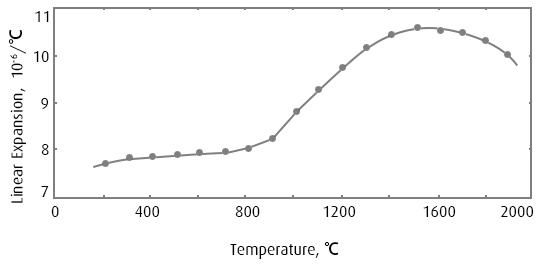
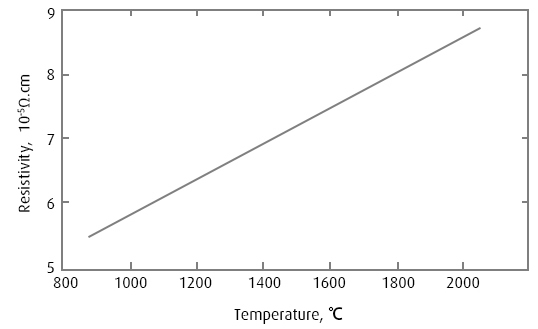
Thermal expansion and electrical resistivity data help engineers evaluate material behavior under different temperature conditions. Refer to the relevant test data for the applicable material condition.
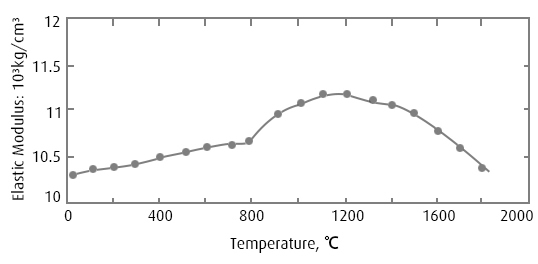
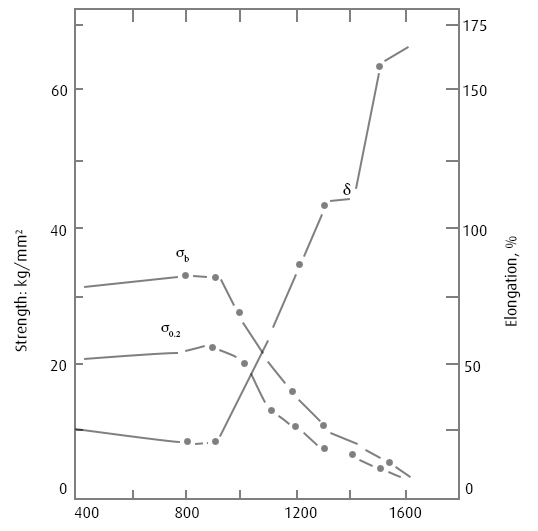
High-temperature tensile behavior and elastic modulus are important when evaluating C103 for components exposed to elevated temperatures. Consult the applicable test curves and material condition when making design decisions.
| Grade | Composition | Form | Temperature (°C) | Tensile Strength (MPa) | Temperature/℃ | Breaking Strength/MPa |
|---|---|---|---|---|---|---|
| C-103 | 10Hf, 1Ti, 0.7Zr | Sheet | 1093 | 189.8 | — | — |
Niobium C103 can be utilized across various high-tech industries where extreme performance under harsh conditions is required.
C103 is used in aerospace and defense applications where high-temperature strength, stability and reliability are critical.
The alloy is suitable for selected energy and power applications that require high-temperature performance and long-term stability.
C103 can be considered for high-temperature processes and specialized components used in advanced manufacturing environments.
AlloyHit is a specialized refractory alloy manufacturer with mature production capacity for C103 (Nb-10Hf-1Ti) niobium-base alloy. We serve aerospace propulsion contractors, space research institutes, defense technology labs and high-temperature equipment manufacturers across Europe, North America, Japan, South Korea and global markets. C103 is a mission-critical aerospace alloy; small deviations in hafnium-titanium ratio or interstitial impurity levels will degrade high-temperature creep performance, weld integrity and low-temperature toughness. AlloyHit focuses strictly on aerospace-grade compositional consistency, delivering semi-finished stock and near-net-shape C103 components for rocket nozzle assemblies, jet-engine heat exchange hardware and deep-space structural parts.
Our C103 alloy strictly follows AMS 7852 and ASTM B654 specification requirements for UNS R04295 grade. We precisely lock Hf and Ti alloying element tolerances, limiting drift within narrow composition windows. Through multi-pass vacuum consumable arc remelting and electron-beam refining, we tightly cap oxygen, nitrogen, carbon and hydrogen interstitial impurities. Excess gaseous impurities can cause brittleness during thermal cycling or post-weld cracking; our melting workflow minimizes such risks. Every ingot batch undergoes full chemical analysis before rolling into C103 sheet, foil, rod-bar, tube-pipe and wire forms.
AlloyHit supplies standard rolled C103 semi-finished products including thin foil for thermal shielding, sheet for nozzle segments, rod & bar for machined structural blanks, seamless tube for heat-transfer circuits and fine C103 welding wire. Beyond standard stock sizes, we support custom dimensions, special wall-thickness tubes, and pre-machined blanks according to customer engineering drawings. We deliver material in annealed or cold-worked status as project requires, matching the ductility and hardness targets for subsequent stamping, forming or electron-beam welding operations.
C103 niobium-hafnium-titanium alloy is highly susceptible to oxygen pickup at elevated temperature. All homogenization, stress-relief and recrystallization annealing for AlloyHit C103 products run under high-vacuum environment, avoiding surface contamination that would hurt ductility and weldability. Our technical team tunes annealing parameters referencing actual component service temperature, stabilizing grain size and reserving proper post-weld ductility for rocket-propulsion assembly work. We also provide technical guidance for customers doing post-processing and protective coating operations on C103 parts.
For aerospace and space-research customers, traceability is non-negotiable. Each C103 production batch from AlloyHit keeps complete records from raw alloy ingot through melting, rolling, heat-treatment to final inspection. We provide full MTR material test reports, spectro-chemical composition certificates, mechanical test data (tensile, yield, elongation) and dimensional inspection documents. These documents support customer incoming quality audit for aerospace qualification workflows.
We handle export packaging with vacuum-sealed moisture-proof packaging plus seaworthy wooden crates, suitable for long-distance overseas transit. We accept small-volume lab-scale trial batches for prototype testing and also support long-term serial-production orders for aerospace series programs. Our refractory-metals engineering team can assist customers evaluating whether C103, pure niobium or alternative niobium alloy like Nb521 fits their thermal-cycle, creep-load and weight-reduction targets. Submit your project requirements through our website inquiry or email for formal quotation: https://www.alloyhit.com/niobium-alloy/niobium-c103.html.
When designing high‑temperature aerospace structural parts, engineers frequently evaluate C103 (Nb‑10Hf‑1Ti) side‑by‑side against pure niobium metal and competing niobium refractory alloy Nb521. Each material shows distinct strength‑creep‑ductility trade‑offs for rocket‑nozzle, thermal‑shield and heat‑exchange service environments.
Pure niobium delivers excellent ductility, easy cold forming and good general corrosion resistance, but its mechanical strength drops rapidly as temperature climbs above 800°C. It cannot sustain high‑load creep conditions for long‑duration aerospace hot‑section components. C103 adds solid‑solution strengthening via hafnium and titanium alloying elements, greatly boosting mid‑temperature tensile strength and creep‑resistance performance while still preserving good ductility, cold‑formability and excellent weldability that pure niobium possesses. C103 keeps ductile‑brittle transition temperature as low as ‑196°C, performing reliably under extreme cryogenic‑to‑high‑temperature cycling in space propulsion hardware.
On the downside, C103 carries higher raw‑material cost than pure niobium due to expensive hafnium additions, and its oxidation resistance remains limited just like pure niobium, requiring protective coatings for high‑temperature air‑exposed scenarios.
Choose pure niobium for moderate‑temperature vacuum equipment, chemical hardware and general lab components. Choose C103 when you need lightweight refractory material to bear sustained mechanical stress and creep loads for rocket‑propulsion and aerospace thermal‑cycling assemblies.
Nb521 (Nb‑5W‑2Mo‑1Zr) is another well‑known niobium‑base high‑temperature alloy, strengthened by tungsten, molybdenum and zirconium precipitates. Nb521 demonstrates significantly superior creep‑resistance performance above 1200°C compared with C103, delivering much lower creep‑rate under constant high‑temperature load. However, Nb521 comes with trade‑offs: its room‑temperature ductility and fabricability are reduced, forming complex thin‑walled components is more difficult, and welding operations are more technically demanding.
C103 stands out for its outstanding manufacturability: it can be rolled into very thin foil, stamped and formed into intricate nozzle‑skirt profiles, and maintains high weld‑joint integrity. Even though its creep performance falls behind Nb521 at temperatures above 1300°C, C103 is easier to produce into complex thin‑wall aerospace parts.
Select Nb521 if your component requires long‑term high‑temperature creep resistance above 1300°C and forming complexity is moderate. Prefer C103 when your design emphasizes easy forming, excellent weldability, thin‑wall geometry and good low‑temperature toughness, typical for many rocket‑nozzle extension‑segment applications.

Molybdenum‑based refractory alloys offer outstanding high‑temperature strength and creep‑resistance above 1400°C, with relatively competitive raw‑material pricing. Their major disadvantage is inherent room‑temperature brittleness. Molybdenum alloys are hard to form into complex thin‑walled shapes; welded joints tend to become brittle. In air atmosphere, molybdenum oxidizes rapidly starting near 600°C, so strict vacuum or inert‑gas protection is mandatory during high‑temperature service.
C103 niobium‑hafnium‑titanium alloy has higher density than titanium but much lower density than molybdenum alloys, delivering obvious weight‑saving benefits for flying aerospace hardware. It retains good ductility at room and cryogenic temperature; complex thin‑wall components can be manufactured by rolling and stamping. Welded C103 joints still maintain usable toughness. Its working ceiling is limited by oxidation performance rather than room‑temperature brittleness.
Choose molybdenum alloys for static vacuum‑furnace hardware where component weight is not critical. Choose C103 for flight‑weight‑sensitive aerospace propulsion parts, where lightweight, formability and weld‑integrity take priority over ultra‑high‑temperature creep‑resistance above 1400°C.
If you face material-selection uncertainty for your aerospace or high-temperature project, please submit your working temperature, creep-load requirement, geometry constraints and weight-reduction targets via AlloyHit C103 product page https://www.alloyhit.com/niobium-alloy/niobium-c103.html. Our metallurgical engineers will provide customized material advice and formal quotation service for your prototype or serial-production program.
A: Generic C103 often relaxes hafnium-titanium tolerance and interstitial impurity limits for cost-reduction purposes. AlloyHit C103 targets aerospace-level AMS-7852 compliance. We apply multi-step vacuum refining to control O/N/C/H trace elements, and every production batch is verified with full-spectrum chemical testing. This consistency delivers stable high-temperature creep resistance, reliable weld performance and low-temperature toughness critical for rocket-propulsion components, rather than just meeting basic nominal composition values.
A: AlloyHit produces C103 sheet & foil, C103 rod & bar, seamless C103 tube & pipe and C103 welding wire. We can produce ultra-thin foil for thermal-shield assemblies, heavy-gauge plate for structural blanks, thin-wall tubing for heat-exchange circuits. We can also deliver cut-to-size pieces or simple pre-machined blanks according to customer drawings. Both annealed and cold-worked material states are available to satisfy downstream forming and welding workflows.
A: C103 contains chemically-active hafnium and titanium alloying elements. Under non-vacuum melting conditions, these elements readily combine with oxygen and nitrogen to form brittle inclusions. Vacuum consumable-arc remelting and electron-beam melting used at AlloyHit suppress gaseous contamination. This keeps high elongation values, prevents weld-zone brittleness and maintains reliable mechanical performance under repeated high-low-temperature thermal cycles typical in space-flight hardware.
A: Yes. Every C103 batch from AlloyHit retains full manufacturing traceability records. We provide MTR material test reports, spectro-chemical analysis certificates, room-temperature tensile test results, grain-size inspection records and dimension inspection reports. These documents support customers’ incoming inspection, part-qualification and quality-archive requirements for aerospace and defense-related projects.
A: C103 shows outstanding specific strength, ductility and weldability in vacuum or inert-gas high-temperature environments, but its intrinsic oxidation resistance in air above 1000°C is poor. For long-duration exposure to hot-oxygen-containing atmosphere, C103 components must apply specialized anti-oxidation protective coatings such as silicide-based coating systems. Without coating, rapid surface oxidation will degrade component service life.
A: Electron-beam welding EBW and inert-gas-shielded GTAW are preferred joining processes for C103 components. Welding must run under high-vacuum or high-purity inert-gas shielding to avoid oxygen-nitrogen contamination of weld pools. After welding, stress-relief vacuum annealing at 1100-1200°C for 1-2 hours is generally recommended to recover ductility of the heat-affected zone. AlloyHit’s engineering team can share practical processing notes when you place your inquiry.
A: Standard-dimension C103 sheet, rod and wire semi-finished goods in stock can be ready within 10-18 working days. Custom-spec C103 such as special-wall-thickness seamless tubes, ultra-thin foil or pre-machined blanks require full vacuum-melting and custom rolling cycles, normally taking 25-45 working days, subject to alloy-ingot melting scheduling and complexity of final dimensions.
A: Please specify: required product form (sheet / foil / rod / tube / wire), exact dimension including thickness / diameter / length / tolerance, material condition (annealed or cold-worked), order quantity, any special impurity-cap requirements, end-use application (aerospace prototype / serial-production part / lab research), and whether you need full aerospace-level MTR documentation.
Tell us your required product form, dimensions, quantity and technical specifications. Our team can help review your C103 niobium alloy requirements for your project.