 +86 13120915623

High Melting Point
Pure niobium has a melting point of approximately 2468°C. This property supports its consideration for selected high-temperature applications, subject to the service atmosphere, temperature, and component design.

AlloyHit supplies niobium foil and strip for specialized industrial, electronic, scientific research, and advanced engineering applications. Known for its high melting point, ductility, and corrosion resistance in suitable environments, niobium can be processed into thin, flat forms for applications requiring specific thicknesses, widths, and surface conditions.
Niobium foil with thicknesses down to 0.02 mm and material purity exceeding 99.95% may be available, subject to product specifications and order requirements. Thickness uniformity, surface quality, dimensional tolerances, and inspection documentation can be discussed according to project needs. Custom foil and strip dimensions are subject to confirmation.
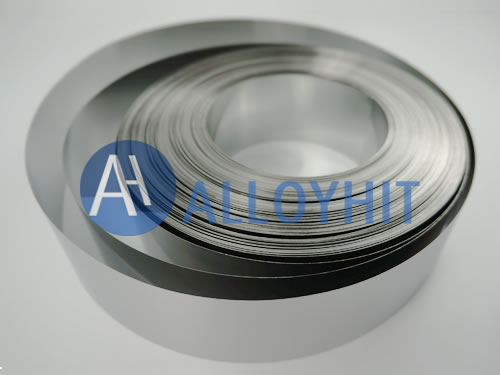

Available in ultra-thin thicknesses from 20μm to 100μm for precision applications.

Thickness tolerance of ±1μm achievable, subject to material thickness and specifications.

Purity options include 99.95%, 99.99% and 99.995%+ niobium to meet different requirements.

Fine surface finish with Ra below 0.1μm for applications requiring enhanced surface quality.
Pure niobium foil and strip are thin, flat material forms used in specialized electronic, scientific research, and industrial applications. The following table summarizes indicative dimensional ranges and reference material properties. Actual availability, material purity, thickness tolerances, surface condition, and inspection requirements should be confirmed against the agreed product specification.
| Parameter | Value | Test Method |
|---|---|---|
| Thickness Range | 20–100 μm (0.02–0.1 mm) | Suitable Thickness Measurement Method |
| Width Range | 10–600 mm | Dimensional Measurement |
| Length | 100–5000 mm or coil form, subject to availability | Dimensional Measurement |
| Purity | ≥ 99.95%, subject to grade and specification | GDMS / ICP-MS, as agreed |
| Thickness Tolerance | To be confirmed according to thickness and order requirements | Agreed Thickness Measurement Method |
| Surface Roughness | To be specified according to application requirements | Suitable Surface Measurement Method |
| Tensile Strength | Reference value: 240–340 MPa; depends on material condition | ASTM E8/E8M, where applicable |
| Melting Point | Approximately 2468°C (4474°F) | Reference Property Value |
Pure niobium foil combines a high melting point, corrosion resistance in suitable environments, and useful electrical and superconducting properties in a thin, lightweight form. Its thin profile makes thickness control, surface quality, and handling important considerations during fabrication and application. Material performance depends on purity, foil thickness, surface condition, and service environment.
Pure niobium has a melting point of approximately 2468°C. This property supports its consideration for selected high-temperature applications, subject to the service atmosphere, temperature, and component design.
Niobium offers good corrosion resistance in many environments. The suitability of niobium foil for a particular application depends on the chemicals involved, temperature, surface condition, and operating conditions.
Niobium has useful electrical properties and a superconducting transition temperature of approximately 9.2 K. For specialized applications, suitability depends on the required material condition and component design.
Pure niobium foil specifications commonly focus on thickness, thickness tolerance, width, surface condition, and flatness. Because thin foil can be susceptible to creasing and handling damage, suitable processing, inspection, and packaging are important.
The following values provide a general reference for pure niobium. They describe the base material rather than guaranteed thickness, surface, or dimensional requirements for finished foil.
| Property | Typical Value |
|---|---|
| Melting Point | Approx. 2468°C (4474°F) |
| Density | Approx. 8.57 g/cm³ |
| Thermal Conductivity | Approx. 53.7 W/(m·K) |
| Coefficient of Thermal Expansion | Approx. 7.3 × 10⁻⁶ /K |
| Superconducting Transition Temperature | Approx. 9.2 K (−263.95°C) |
Note: These are typical reference properties of pure niobium, not guaranteed acceptance criteria. When specifying pure niobium foil, confirm the required purity, thickness and tolerance, width, surface condition, material condition, applicable standards, and inspection requirements.
Tell us your required foil thickness, width, length, material purity, surface finish, quantity, and technical specifications. Our team can review your requirements and discuss suitable supply options for your application.
Pure niobium foil and strip can be specified according to thickness, width, length, surface condition, and material requirements for specialized industrial, electronic, and scientific applications. Custom supply options may include dimensional specifications, cut-to-size formats, surface requirements, and inspection documentation, subject to material availability and processing capabilities.
Share your required thickness, width, length, material purity or grade, dimensional tolerances, surface requirements, quantity, and technical drawings with our team. We can review your specifications and discuss suitable supply and processing options.
Request a QuotePure niobium foil and strip production involves material preparation, rolling, thickness reduction, surface finishing, and dimensional inspection. The processing route depends on the required material purity, target thickness, width, length, surface condition, and applicable product specifications. Inspection requirements are determined according to the agreed product specification.
Niobium starting material is selected according to the required purity, material grade, and product specification. Appropriate preparation and handling help minimize contamination before subsequent processing.
Depending on the manufacturing route, niobium ingot or intermediate stock is processed into suitable sheet or strip starting material. The preparation route depends on the required product dimensions and material condition.
Rolling is used to reduce material thickness and produce thin niobium foil or strip. Rolling conditions and reduction schedules depend on the starting thickness, target gauge, material condition, and required dimensional consistency.
Intermediate annealing may be used when required by the rolling schedule and material condition. Thickness measurements and process adjustments help achieve the specified gauge and dimensional requirements.
Surface finishing and cleaning may be performed according to the required surface condition. Where applicable, slitting or cut-to-size processing is used to achieve the specified strip width or foil dimensions.
Finished niobium foil and strip are checked against the agreed requirements. Inspection may cover thickness, width, length, surface condition, and applicable material documentation. Products are then protected and packaged according to the agreed delivery requirements.
Pure niobium foil and strip processing requires appropriate control of material purity, rolling conditions, thickness accuracy, and surface quality. Processing and inspection requirements depend on the target thickness, width, product form, material condition, and intended application.
Pure niobium starting material should meet the specified purity requirements and applicable material specifications. Material identification, cleanliness, and starting-stock condition should be considered before rolling and subsequent processing.
Rolling schedules are selected according to the starting material, target foil thickness, and required material condition. Thickness measurements and process adjustments help achieve the specified gauge, width, and dimensional consistency.
Surface condition and edge quality should be evaluated according to the product specification and intended application. Cleaning, surface finishing, slitting, and cut-to-size processing may be considered where available and agreed as part of the order requirements.
Intermediate or final annealing may be used when required by the processing route or specified material condition. Heat-treatment parameters should be determined according to the material condition, target thickness, and applicable process requirements rather than assumed to be identical for every foil or strip product.
Tell us your required thickness, width, length, material purity, quantity, and technical specifications. Our team can review your supply options for your application.
Pure niobium foil and strip are used in selected electronic, scientific research, and specialized industrial applications where thin material forms, material purity, and surface characteristics are important. Application suitability depends on the material grade, thickness, surface condition, operating conditions, and service environment.

Pure niobium foil and strip may be considered for specialized electronic components and electrical assemblies that require thin metal stock and controlled material specifications. Suitability depends on component design, fabrication methods, and the intended operating conditions.
Niobium foil and strip can be used as material samples or feedstock for laboratory studies, experimental assemblies, and prototype development. Thickness, width, purity, and surface requirements can be specified according to the project's technical objectives.
Pure niobium foil and strip may be evaluated for selected industrial applications requiring a refractory metal in a thin, flat form. Its suitability should be assessed against the operating temperature, chemical environment, fabrication requirements, and other service conditions.
Pure niobium foil and strip quality requirements may cover material grade, chemical composition, thickness, width, length, surface condition, inspection, and material documentation. Applicable standards and acceptance criteria should be confirmed according to the required material specification, product form, and purchase requirements.

ASTM B393 is a relevant specification to review for niobium and niobium alloy sheet, strip, and plate. Before specifying this standard for pure niobium foil or strip, confirm its applicability to the required material grade, thickness, dimensions, and product requirements against the current edition and purchase order. Conformity should only be claimed when supported by the applicable material documentation.
ISO 9001 specifies requirements for a quality management system rather than a material product specification. Any certification statement should reflect the actual certification status, certified organization, and scope. Material inspection records and traceability documents may be provided according to the agreed order requirements.
Inspection requirements can be agreed before ordering and may include material composition, foil thickness, strip width, length, surface condition, and material identification. Available inspection reports and traceability documentation depend on the supplied material and the agreed purchase requirements.
Quality assurance for pure niobium foil and strip focuses on material verification, thickness accuracy, surface condition, dimensional consistency, and product traceability. Inspection methods, documentation, and acceptance criteria can be agreed upon according to the applicable material specifications and order requirements.

Material grade, chemical composition, and specified purity requirements can be checked against the applicable product specifications and agreed inspection requirements.

Foil and strip inspection may cover thickness, width, length, surface condition, and edge quality. Applicable tolerances and acceptance criteria should be confirmed against the product specification before order fulfillment.

Available documentation can be agreed upon before ordering and may include material identification, dimensional inspection results, chemical analysis, and applicable material or inspection certificates.
Selecting pure niobium foil and strip involves more than choosing a material grade. Thickness, width, length, surface condition, and material documentation can all affect fabrication and final component performance. AlloyHit helps customers clarify these requirements and discuss suitable supply options for their applications.
Material purity and chemical composition are important when selecting pure niobium foil and strip for technical applications. Required purity levels and material grades can be specified and checked against the agreed product documentation.
Thickness, width, length, and dimensional tolerances can influence material handling, forming, and component fabrication. Providing the required dimensions and tolerances helps establish suitable product specifications before ordering.
Surface finish, edge condition, and material state should match the intended fabrication process and end use. Surface requirements and any specified processing or heat-treatment needs should be reviewed before supply.
Depending on availability and processing capabilities, supply options may include specified foil thicknesses, custom strip widths, cut-to-length material, and agreed inspection documentation. Drawings, quantities, material specifications, and service conditions help clarify suitable options for each project.
Pure niobium foil and strip can be compared with tantalum foil and C103 niobium alloy sheet or foil to evaluate material composition, chemical compatibility, temperature requirements, fabrication considerations, and application suitability. Material selection depends on the operating environment, required thickness, surface condition, component design, and verified technical specifications.
| Comparison Factor | Pure Niobium Foil / Strip | Tantalum Foil / Strip | C103 Niobium Alloy Sheet / Foil |
|---|---|---|---|
| Material Composition | Unalloyed niobium supplied according to the specified purity grade and chemical composition. | Unalloyed tantalum, with purity and impurity limits defined by the applicable material specification. | Niobium-based alloy commonly designated Nb-10Hf-1Ti. Confirm the required composition against the applicable material specification. |
| Corrosion Considerations | May be considered for selected environments. Compatibility depends on the chemical medium, concentration, temperature, and other service conditions. | Often considered for applications requiring corrosion resistance in specific chemical environments. Compatibility should be evaluated for the actual process conditions. | Selection should account for alloy composition, operating conditions, and component requirements. Corrosion performance should be verified for the intended environment. |
| High-Temperature Considerations | Has a high melting point, but usable temperature depends on atmosphere, mechanical loading, material condition, and component design. | Has a high melting point and may suit selected high-temperature applications. Oxidation behavior and service conditions must also be evaluated. | Used in demanding high-temperature engineering applications where its alloy-specific properties are appropriate. Suitability depends on material condition and service requirements. |
| Forming & Fabrication | Rolling, bending, cutting, and other fabrication requirements depend on foil thickness, material condition, and component geometry. | Fabrication should account for material behavior, foil thickness, surface requirements, and finished-part tolerances. | Forming and fabrication procedures should account for alloy composition, material condition, thickness, and component design. |
| Typical Selection Focus | Material purity, thickness, width, surface condition, and fabrication requirements. | Chemical compatibility, service conditions, required thickness, and project cost. | Alloy-specific properties, high-temperature design requirements, thickness, and material availability. |
Selecting a suitable foil or strip requires consideration of material composition, operating temperature, chemical exposure, required thickness and width, surface condition, forming requirements, and total project cost. Compare verified technical data with the actual service conditions before finalizing the material specification.
Consider pure niobium foil or strip when an unalloyed niobium material meets the required chemical, physical, and fabrication specifications. Evaluate material purity, thickness, width, surface condition, and operating environment before ordering.
Consider tantalum when corrosion resistance in a specific chemical environment is a key design requirement. Confirm compatibility with the actual process medium, temperature, concentration, and project budget.
Consider C103 when a niobium-based alloy is required for demanding high-temperature structural applications. Compare alloy-specific mechanical properties, material condition, fabrication requirements, and operating environment with the needs of the finished component.
Material suitability cannot be determined by melting point or nominal composition alone. Consider the actual service environment, operating temperature, mechanical loading, chemical exposure, material condition, foil thickness, fabrication process, and applicable material specifications. Verify technical properties, dimensional requirements, and product availability before ordering.
Pure niobium foil and strip are made from unalloyed niobium, with actual purity and impurity limits determined by the specified material grade. When selecting a product, confirm its chemical composition, purity requirements, thickness, and applicable material specifications. Material documentation can help verify the supplied product against the agreed requirements.
Available thicknesses and widths depend on the material grade, supply condition, stock availability, and processing capabilities. Lengths may be supplied as cut pieces or in other agreed forms, subject to availability. When requesting a quotation, provide the required thickness, width, length, dimensional tolerances, and quantity so that suitable supply options can be confirmed.
The appropriate thickness depends on the component design, forming or fabrication method, mechanical requirements, dimensional tolerances, and operating conditions. Consider the required stiffness, flexibility, handling requirements, and final component dimensions. For critical applications, confirm the specified thickness tolerance and material condition against the engineering drawings and applicable technical requirements.
Pure niobium foil and strip may be cut, slit, or formed using suitable processes, depending on thickness, material condition, component geometry, and required tolerances. Surface protection, edge quality, and handling should also be considered when working with thin material. Confirm available processing services and any special requirements before placing an order.
Pure niobium foil and strip may be considered for specialized electronic components, scientific research, laboratory studies, prototype development, and selected industrial applications. Suitability depends on material purity, thickness, surface condition, operating temperature, chemical environment, and fabrication requirements. Evaluate the actual service conditions and component design before selecting niobium for a particular application.
Applicable standards depend on the material grade, product form, and purchase requirements. ASTM B393 is a relevant specification to review for niobium and niobium alloy sheet, strip, and plate. Confirm the current edition, its applicability to the required foil dimensions, and the specific material requirements before specifying compliance. Inspection requirements may include chemical composition, thickness, width, surface condition, and material identification. Verify available inspection documentation before ordering.
For a quotation, provide the required material purity or grade, thickness, width, length or supply form, quantity, and dimensional tolerances. Include any requirements for surface condition, slitting, cut-to-size processing, material testing, inspection reports, or packaging. Technical drawings and application details can also help clarify the required specifications and available supply options.
Tell us your pure niobium foil and strip requirements, including material purity or grade, thickness, width, length, required quantity, dimensional tolerances, and intended application.
Technical drawings, dimensional specifications, surface requirements, applicable material standards, and inspection or documentation needs will help us review your project and discuss suitable supply options.
info@alloyhit.com