 +86 13120915623


High Melting Point
Niobium has a melting point of approximately 2468°C. The suitability of niobium wire for elevated-temperature service depends on the atmosphere, oxidation conditions, mechanical loading, and operating environment.

AlloyHit produces high-precision niobium wire from 99.95%+ pure niobium. Using controlled wire drawing processes, we offer diameters ranging from 0.1 mm to 5 mm, with consistent dimensional accuracy and surface quality to meet a variety of technical and industrial requirements.
Each wire is manufactured under strict quality controls to support consistent material properties, dimensional uniformity, and surface integrity. With a melting point of approximately 2468°C and good performance in suitable service environments, niobium wire is used in specialized electronic, vacuum technology, scientific research, and high-temperature applications.
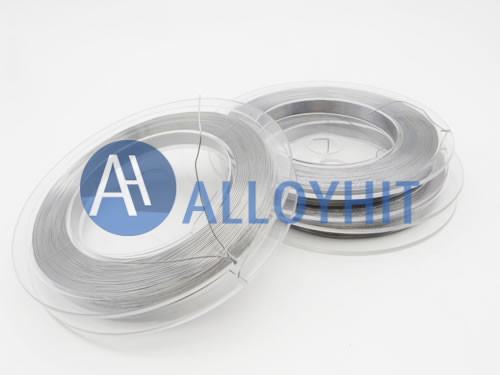

Ultra-fine wire sizes for specialized applications.

Precision tolerances available for specified requirements.

Multiple purity grades available, subject to specification.
HSurface conditions available to meet different application requirements.
AlloyHit supplies precision niobium wire in a range of diameters, purity levels, surface conditions, and mechanical properties for specialized industrial and engineering applications. The following table outlines typical specifications and available product options. Actual dimensions, tolerances, mechanical properties, and inspection and order specifications.
| Parameter | Specification | Tolerance |
|---|---|---|
| Wire Diameter | 0.1–5 mm |
±1 μm (for diameters below 50 μm) ±1% (for diameters above 50 μm) |
| Length | Up to 1000 meters on spools | Subject to order requirements |
| Purity | 99.95%, 99.99%, 99.995%+ | Subject to specified purity grade |
| Surface Finish | Bright annealed or as-drawn | Ra < 0.05 μm |
| Tensile Strength |
240–340 MPa (annealed) 500–700 MPa (cold worked) |
±10 MPa |
| Elongation |
20–30% (annealed) 2–5% (cold worked) |
±2% |
| Straightness | 0.5 mm per meter | Subject to product form and order requirements |
Pure niobium wire combines a high melting point, corrosion resistance in selected environments, and distinctive electrical and superconducting properties. Its ductility also supports wire drawing and the production of specified diameters when suitable processing conditions are used. Material selection depends on purity, wire diameter, dimensional tolerances, surface condition, and the requirements of the intended application.
Niobium has a melting point of approximately 2468°C. The suitability of niobium wire for elevated-temperature service depends on the atmosphere, oxidation conditions, mechanical loading, and operating environment.

Pure niobium can provide good corrosion resistance in selected chemical environments. Performance depends on the chemical medium, concentration, temperature, and exposure conditions of the intended application.

Pure niobium has a superconducting transition temperature of approximately 9.2 K (−263.95°C). This property is relevant to selected cryogenic research and superconducting applications, depending on component design and operating requirements.

Niobium's ductility supports wire drawing under suitable processing conditions. Achievable wire diameter, dimensional consistency, and surface quality depend on material purity, processing history, and the selected manufacturing route.
Pure niobium wire exhibits the characteristic thermal, electrical, and superconducting properties of unalloyed niobium. The following figures are typical reference values for niobium, not guaranteed values for every wire product. Actual properties may vary with temperature, purity, processing history, and material condition.
| Physical Property | Typical Value |
|---|---|
| Melting Point | Approximately 2468°C (4474°F) |
| Density | Approximately 8.57 g/cm³ |
| Thermal Conductivity | Approximately 53.7 W/(m·K) |
| Electrical Resistivity | Depends on temperature, purity, and material condition |
| Coefficient of Thermal Expansion | Approximately 7.3 × 10⁻⁶ /K |
| Superconducting Transition Temperature | Approximately 9.2 K (−263.95°C) |
Note: These figures are typical reference properties of niobium, not guaranteed acceptance criteria for finished wire. When selecting pure niobium wire, also consider wire diameter, dimensional tolerances, surface condition, material condition, and intended application. Confirm the applicable technical specifications before ordering.
Tell us your required wire diameter, length, material purity, surface finish, quantity, and technical specifications. Our team can review your requirements and discuss suitable supply options for your application.
Pure niobium wire can be supplied according to wire diameter, length, surface condition, material purity, and other project requirements for specialized industrial, electronic, scientific research, and engineering applications. Custom supply options may include specified wire dimensions, cut lengths, coil or spool formats, and inspection documentation, subject to material availability and processing capabilities.
Share your required wire diameter, length, material purity or grade, surface requirements, dimensional tolerances, quantity, and technical drawings with our team. We can review your specifications and discuss suitable supply and processing options for your project.
Request a QuotePure niobium wire manufacturing involves material selection, wire stock preparation, drawing, intermediate heat treatment when required, surface finishing, and final inspection. The specific processing route depends on the required wire diameter, material purity, material condition, surface quality, and dimensional tolerances. Manufacturing and inspection requirements are established according to the agreed product specifications and intended application.
Niobium starting material is selected according to the required purity, material grade, and product specifications. Appropriate material handling and preparation help minimize contamination before wire processing.
The starting material is prepared for the selected wire manufacturing route. Depending on the initial material form and production method, preparation may involve forming, machining, or other suitable operations to establish the dimensions and material condition required for subsequent wire processing.
Wire drawing reduces the starting material to the required diameter through controlled deformation. The drawing sequence and reduction per pass depend on the target wire diameter, material condition, and processing requirements. Multiple drawing passes may be used to achieve the specified dimensions.
When required, intermediate annealing may be used between drawing stages to adjust the material condition and support further deformation. Heat treatment parameters depend on the material, processing history, and required final properties. Any specified treatment is subject to the agreed manufacturing requirements.
The wire surface is finished or cleaned according to the specified surface condition. Depending on the product requirements, the wire may be supplied in straight lengths, coils, or on spools, subject to available processing and packaging options.
Finished niobium wire is inspected according to the agreed product specifications. Checks may include wire diameter, dimensional consistency, surface condition, length or packaging format, and applicable material documentation. Products are protected and packaged according to the agreed delivery requirements.
Pure niobium wire manufacturing requires control of material purity, wire diameter, dimensional consistency, surface condition, and material state. Drawing conditions and any intermediate heat treatment depend on the initial material condition, target wire diameter, and required final properties. Inspection criteria should be established according to the agreed product specifications and intended application.
The starting material should meet the specified niobium purity and applicable material requirements. Material identification, chemical composition, and cleanliness should be considered before drawing and subsequent processing.
Wire diameter is controlled according to the required nominal size and agreed tolerances. Measurements at appropriate stages help assess dimensional consistency and verify that the finished wire meets the specified requirements.
The wire surface should be evaluated against the agreed requirements for visible defects, cleanliness, and surface condition. Cleaning or additional surface finishing may be performed when required and supported by the manufacturing process.
Drawing reduces the wire diameter through controlled plastic deformation. Intermediate annealing may be required to adjust the material condition and support further drawing. Processing parameters depend on the starting condition, reduction schedule, target diameter, and required final properties.
Tell us your required wire diameter, length, material purity, surface finish, quantity, and technical specifications. Our team can review your requirements and discuss suitable supply options for your application.
Pure niobium wire is used in selected superconductivity-related research, scientific instrumentation, and specialized electronic applications. Its suitability depends on material purity, wire diameter, surface condition, required properties, and operating environment. Application-specific requirements should be evaluated before material selection.

Niobium becomes superconducting below its superconducting transition temperature of approximately 9.2 K. Niobium wire may be used in specialized research assemblies and superconductivity experiments where material purity, wire dimensions, and low-temperature behavior are important. Suitability depends on the specific design and operating conditions.
Pure niobium wire can be considered for specialized laboratory equipment and experimental setups requiring a defined material composition and controlled wire dimensions. The appropriate wire specification depends on the instrumentation design, experimental objectives, and environmental conditions.
Niobium wire may be considered for selected electronic components, research devices, and specialized sensors when its material properties meet the design requirements. Wire diameter, surface condition, purity, and compatibility with the intended manufacturing process should be evaluated for each application.
Pure niobium wire quality requirements may cover material grade, chemical composition, wire diameter, dimensional tolerances, surface condition, mechanical properties, and material documentation. Applicable standards and acceptance criteria should be confirmed according to the required material grade, wire specifications, and purchase requirements.

ASTM B392 covers specified grades of wrought niobium and niobium alloy bar, rod, and wire, including unalloyed niobium and niobium-zirconium alloy grades. Its requirements address chemical composition and mechanical properties, among other applicable requirements. For pure niobium wire, the relevant grade, wire specifications, and acceptance criteria should be confirmed against the current edition and purchase order. Conformity should only be claimed when supported by the applicable material inspection and documentation.
ISO 9001 specifies requirements for a quality management system rather than a material product specification. Any certification statement should reflect the actual certification status, certified organization, and scope. Material inspection records and traceability documents may be provided according to the agreed order requirements.
Inspection requirements can be agreed before ordering and may include chemical composition, wire diameter, dimensional consistency, surface condition, mechanical properties where specified, and material identification. Available test reports and traceability documentation depend on the supplied material and the agreed inspection requirements.
Quality assurance for pure niobium wire focuses on material verification, wire diameter consistency, surface condition, and product traceability. Inspection methods, documentation, and acceptance criteria can be agreed upon according to the applicable material specifications and order requirements.

Material grade, chemical composition, and specified purity requirements can be checked against the applicable product specifications and agreed inspection requirements. Material identification helps confirm that the supplied wire corresponds to the specified material.

Inspection may cover wire diameter, dimensional consistency, and surface condition. Applicable diameter tolerances and surface acceptance criteria should be confirmed against the agreed product specifications before order fulfillment.

Available documentation can be agreed upon before ordering and may include material identification, dimensional inspection results, chemical analysis, and applicable material or inspection certificates. Documentation availability depends on the supplied material and the agreed order requirements.
Selecting pure niobium wire requires consideration of more than material composition. Wire diameter, dimensional consistency, surface condition, and delivery format can influence handling, further processing, and component fabrication. AlloyHit works with customers to clarify technical requirements and identify suitable wire supply options for their intended applications.
Wire diameter is a key consideration in component design and subsequent processing. Defining the target diameter and acceptable dimensional variation helps establish appropriate product requirements for each application.
Niobium wire processing involves controlled diameter reduction and attention to the material condition. The required wire size, surface condition, and downstream fabrication method can be reviewed when discussing suitable product specifications.
Depending on wire dimensions and available processing capabilities, supply may be discussed in terms of specified lengths, coils, or spool formats. Confirming the preferred delivery form and handling requirements helps align the product with the customer's production process.
Providing the required material purity, wire diameter, dimensional tolerances, quantity, and intended application helps clarify the product requirements. Applicable inspection records and material documentation can be discussed according to the agreed order specifications.
Pure niobium wire can be compared with tantalum wire and C103 niobium alloy wire to evaluate material composition, chemical compatibility, temperature requirements, wire drawing considerations, and application suitability. The appropriate material depends on the operating environment, required wire diameter, surface condition, mechanical requirements, and verified technical specifications.
| Comparison Factor | Pure Niobium Wire | Tantalum Wire | C103 Niobium Alloy Wire |
|---|---|---|---|
| Material Composition | Unalloyed niobium supplied according to the specified purity grade and chemical composition. | Unalloyed tantalum, with purity and impurity limits defined by the applicable material specification. | Niobium-based alloy commonly designated Nb-10Hf-1Ti. Confirm the required composition against the applicable material specification. |
| Corrosion Considerations | May be considered for selected chemical and industrial environments. Compatibility depends on the chemical medium, concentration, temperature, and other service conditions. | Often selected for its corrosion resistance in specific chemical environments. Compatibility should be evaluated for the actual process medium and operating conditions. | Suitability depends on alloy composition, environmental exposure, and service conditions. Verify corrosion performance for the intended application rather than assuming it is equivalent to pure niobium or tantalum. |
| Temperature Considerations | Has a high melting point, but usable temperature depends on the atmosphere, mechanical loading, wire condition, and component design. | Has a high melting point and may suit selected high-temperature applications. Oxidation behavior and mechanical requirements must also be evaluated. | May be considered for demanding high-temperature applications where its alloy-specific properties are appropriate. Suitability depends on material condition and service requirements. |
| Wire Drawing & Processing | Drawing and finishing requirements depend on purity, target diameter, dimensional tolerances, surface quality, and material condition. | Wire processing should account for the required diameter, mechanical behavior, surface condition, and finished-product requirements. | Processing requirements depend on alloy composition, material condition, target dimensions, and the capabilities of the selected manufacturing route. |
| Typical Selection Focus | Material purity, wire diameter, dimensional consistency, surface quality, and application requirements. | Chemical compatibility, service conditions, required wire dimensions, and project cost. | Alloy-specific properties, high-temperature design requirements, processing feasibility, and material availability. |
Selecting a suitable refractory metal wire requires consideration of material composition, operating temperature, chemical exposure, mechanical requirements, wire diameter, dimensional tolerances, surface condition, and delivery format. Compare verified material data with the actual service conditions and manufacturing requirements before finalizing the specification.
Consider pure niobium wire when an unalloyed niobium material meets the required chemical, physical, and fabrication specifications. Evaluate material purity, target diameter, dimensional consistency, surface condition, and the requirements of the finished component.
Consider tantalum wire when corrosion resistance in a specific chemical environment is a key design requirement. Confirm compatibility with the actual process medium, temperature, concentration, required wire dimensions, and project budget.
Consider C103 when a niobium-based alloy is required for demanding high-temperature applications and the specified wire form can be manufactured or supplied. Compare alloy-specific properties, dimensional requirements, processing feasibility, and operating conditions before selecting this material.
Material suitability cannot be determined by melting point or nominal composition alone. Consider the actual service environment, operating temperature, mechanical loading, chemical exposure, wire diameter, dimensional tolerances, surface condition, and applicable material specifications. Verify technical properties, processing feasibility, product availability, and inspection requirements before ordering.
Pure niobium wire is an unalloyed refractory metal product valued for its high melting point and specific physical and chemical properties. Its suitability depends on the required purity, wire diameter, surface condition, operating environment, and component design. For demanding applications, verify the material composition and relevant technical data against the intended service conditions.
Specify the nominal wire diameter and required dimensional tolerance based on the design and function of the finished component. Also consider diameter consistency, surface quality, material condition, and any downstream drawing, forming, or assembly operations. For precision applications, provide a technical drawing or written specification so that the required dimensions can be reviewed before ordering.
Niobium wire may be supplied in different material conditions depending on the manufacturing route and product specification. Drawing and heat-treatment history can affect properties such as ductility and workability. The available conditions should be confirmed with the supplier according to the required diameter, mechanical requirements, and intended application rather than assuming that every condition is available for every wire size.
Surface evaluation may include checking for visible cracks, scratches, drawing marks, contamination, or other defects relevant to the application. The acceptable surface condition depends on the wire diameter, end use, and agreed inspection criteria. If surface finish or cleanliness is critical, specify the requirements in advance and confirm the inspection methods available for the order.
The appropriate delivery format depends on wire diameter, order quantity, handling requirements, and available production capabilities. Depending on the product specification, supply may be considered in coils, on spools, or in specified lengths. When requesting a quotation, state your preferred delivery format, required length or coil quantity, and any packaging requirements so availability can be confirmed.
Depending on the purchase specification and available services, inspection may cover chemical composition, wire diameter, surface condition, and material identification. Supporting documents may include a material test report or certificate of conformity when applicable and agreed. Confirm the required tests, document type, traceability information, and any standard-specific requirements before placing an order.
To help assess your requirements, provide the niobium purity grade or chemical specification, wire diameter, dimensional tolerance, required quantity, and preferred delivery format. Include the intended application, material condition, surface requirements, inspection documents, and packaging instructions where relevant. Technical drawings or a detailed specification can help clarify requirements and determine which supply options may be suitable.
Tell us your pure niobium wire requirements, including material purity or grade, wire diameter, dimensional tolerances, required quantity, delivery format, and intended application.
Technical drawings, diameter specifications, surface quality requirements, preferred wire condition, applicable material standards, and inspection or documentation needs can help us review your project and discuss suitable supply options.
info@alloyhit.com